Average Reviews:

(More customer reviews)Are you looking to buy Politics, Language, and Thought: The Somali Experience? Here is the right place to find the great deals. we can offer discounts of up to 90% on Politics, Language, and Thought: The Somali Experience. Check out the link below:
>> Click Here to See Compare Prices and Get the Best Offers
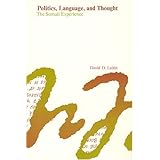
Politics, Language, and Thought: The Somali Experience ReviewAlthough written in 1977, this book contains a wealth of information about Somalia and a basis for understanding the current conflict there. More importantly however, it delves into the issues of language and politics, and how the language you frame your political ideas in can shape the ideas themselves. It applies to any country, as well as to the politics of language here in the United States where bilingual education has become such an important issue. It is extremely though provoking, and after reading it I am willing to pay out the 28 dollars it costs.Politics, Language, and Thought: The Somali Experience OverviewWhen the Somali Republic received independence, its parliamentary government decided to adopt three official languages: English, Italian, and Arabic—all languages of foreign contact. Since the vast majority of the nation's citizens spoke a single language, Somali, which then had no written form, this decision made governing exceedingly difficult. Selecting any one language was equally problematic, however, because those who spoke the official language would automatically become the privileged class.Twelve years after independence, a military government was able to settle the acrimonious controversy by announcing that Somali would be the official language and Latin the basic script. It was hoped that this choice would foster political equality and strengthen the national culture. Politics, Language, and Thought is an exploration of how language and politics interrelate in the Somali Republic. Using both historical and experimental evidence, David D. Laitin demonstrates that the choice of an official language may significantly affect the course of a country's political development.Part I of Laitin's study is an attempt to explain why the parliamentary government was incapable of reaching agreement on a national script and to assess the social and political consequences of the years of nondecision. Laitin shows how the imposition of nonindigenous languages produced inequalities which eroded the country's natural social basis of democracy.Part 2 attempts to relate language to political thought and political culture. Analyzing interviews and role-playing sessions among Somali bilingual students, Laitin demonstrates that the impact of certain political concepts is quite different when expressed in different languages. He concludes that the implications of choosing a language are far more complex than previously thought, because to change the language of a people is to change the ways they think and act politically.Want to learn more information about Politics, Language, and Thought: The Somali Experience?
>> Click Here to See All Customer Reviews & Ratings Now

0 comments:
Post a Comment