Average Reviews:

(More customer reviews)Are you looking to buy Karl Barth's Theological Exegesis: The Hermeneutical Principles of the Romerbrief Period? Here is the right place to find the great deals. we can offer discounts of up to 90% on Karl Barth's Theological Exegesis: The Hermeneutical Principles of the Romerbrief Period. Check out the link below:
>> Click Here to See Compare Prices and Get the Best Offers
Karl Barth's Theological Exegesis: The Hermeneutical Principles of the Romerbrief Period ReviewBurnett's work is an excellent resource for understanding Barth's relationship to the Bible, namely in the area of hermeneutics. He uses a historical approach and provides excellent background information that helps shed light on aspects of Barth's theological exegesis. Moreover, his appendix provides the preface drafts to the first edition of Barth's Romans commentary, and this is the first time they have been made available in English.The only problem I have with the book (and hence 4/5 stars) is that Burnett uses a great deal of German, thus limiting his readership (or limiting one's understanding of the book) and placing the book mostly in academic circles, though perhaps this was his intention. Granted, this is a revised edition of his dissertation at Princeton Theological Seminary. However, I still believe this book could have remained academic and still appealed to a broader audience. For example, Burnett will not even cite the Gottingen Dogmatics in English (except for the first time he cites this work - he notes the title of the English translation, and only at this point). Instead, they are consistently cited as "Unterricht." Thus, if you forget that this is the German title, you find yourself flipping through the early pages to find out what source he's citing. He also cites the rest of Barth's works with their German titles (among other German authors/texts), adding to the difficulty unless one knows German. Thankfully, when he uses German terms he is good at explaining their meaning. An "abbreviation" section at the beginning would have helped tremendously. This may be more of a "heads up" to potential readers and buyers than a genuine critique of the book. Despite this shortcoming I found the book to be of great help in many background issues as they related to Barth's early exegesis.
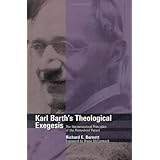
Karl Barth's Theological Exegesis: The Hermeneutical Principles of the Romerbrief Period OverviewForeword by Bruce McCormackFor many students of Scripture and Christian theology, Karl Barths break with liberalism is the most important event that has occurred in theology in over 200 years. In Karl Barths Theological Exegesis Richard E. Burnett provides the first detailed look at this watershed event, showing how Barth read the Bible before and after his break with liberalism, how he came to read the Bible differently than most of his contemporaries, and why Barths contribution is still significant today.As Burnett explains, the crux of Barths legacy is his abandonment of the hermeneutical tradition of Schleiermacher, which had had such a profound influence on Christian thought in the nineteenth and twentieth centuries. This hermeneutical tradition, which began with Herder and extended through Dilthey, Troeltsch, Wobbermin, Wernle, and Barth himself prior to 1915, is characterized by its attempt to integrate broad aspects of interpretation, to establish universally valid rules of interpretation on the basis of a general anthropology, and by its reliance on empathy.Barths discovery that the being of God is the hermeneutical problem implied that the object to be known should determine the way taken in knowing. This fundamental insight brought about a hermeneutical revolution that gave priority to content over method, to actual exegesis over hermeneutical theory. The development of Barths new approach to Scripture is especially evident in his Romerbrief period, during which he developed a set of principles for properly reading Scripture. Burnett focuses on these principles, which have never been discussed at length or viewed specifically in relationship to Schleiermacher, and presents a study that challenges both neo-orthodox and postmodern readings of Barth.This is a crucial piece of scholarship. Not only is it the first major book in English on Barths hermeneutics, but it also employs pioneering research in Barth studies. Burnett includes in his discussion important material only recently discovered in Switzerland and made available here in English for the first time - namely, six preface drafts that Barth wrote for his famous Romans commentary, which some regard as the greatest theological work of all time.In making a major contribution to Barth studies, this volume will also inform scholars, pastors, and students whose interests range from modern Christian theology to the history of biblical interpretation.
Want to learn more information about Karl Barth's Theological Exegesis: The Hermeneutical Principles of the Romerbrief Period?
>> Click Here to See All Customer Reviews & Ratings Now

0 comments:
Post a Comment